This December marks 25 years since universal free admission was introduced across the UK’s national museums and galleries.
The landmark policy transformed public access to culture, and was introduced in stages by the Labour Government elected in 1997:1
📈 The policy was intended to widen access to culture, and it had a significant impact. Within the first decade of free admission, visits to formerly charging museums rose by 151%, with increases of more than 180% at the Natural History Museum and V&A, and 269% at National Museums Liverpool.2
🦖 That growth has continued: in 2025, the Natural History Museum became the UK’s most-visited attraction of any kind for the first time, welcoming 7.1 million visitors – a 13% rise on 2024, and the third consecutive record-breaking year for the museum.3
🎉 There is plenty to celebrate about 25 years of free admission. Free entry has helped make some of the country’s most important collections genuinely open to everyone: removing the need to make a financial decision before walking through the door, and allowing people to visit repeatedly, spontaneously and as part of everyday life.
Have 10 minutes to spare? With discussions underway about the future of this policy, please share what 25 years of universal free admission has meant to you.
❌ This survey closed on 5 October. Thank you to everyone who filled it in!
Click here if you are ready to share your views right away; otherwise, read on to learn about which museums are included, and what the possible changes to this policy are. The survey closes on 5 October.
Which museums are included?
National museums are publicly-funded museums and galleries that are sponsored by the UK Government and hold collections considered to be of national importance. The term generally refers to the 15 DCMS-sponsored museum groups in England.
📋 The current DCMS list is:
- British Museum
- Museum of the Home
- Horniman Museum and Gardens
- Imperial War Museums (IWM)
- National Gallery
- National Museums Liverpool
- National Portrait Gallery
- Natural History Museum
- Royal Armouries
- Royal Museums Greenwich
- Science Museum Group
- Sir John Soane’s Museum
- Tate Gallery Group
- Victoria and Albert Museum (V&A)
- The Wallace Collection
🏛️ Importantly, these are 15 museum groups/institutions, rather than just 15 individual buildings. For example:
- Imperial War Museums includes IWM London, IWM North, IWM Duxford, HMS Belfast and the Churchill War Rooms.
- National Museums Liverpool includes the World Museum, Walker Art Gallery, Museum of Liverpool, Maritime Museum, International Slavery Museum, Lady Lever Art Gallery, and Sudley House.
- The Natural History Museum includes the main South Kensington museum and the branch at Tring.
- Royal Museums Greenwich includes the National Maritime Museum, Royal Observatory, Queen’s House and Cutty Sark.
- Science Museum Group includes the Science Museum, National Railway Museum (York), Science and Industry Museum (Manchester), National Science and Media Museum (Bradford) and Locomotion (Co. Durham).
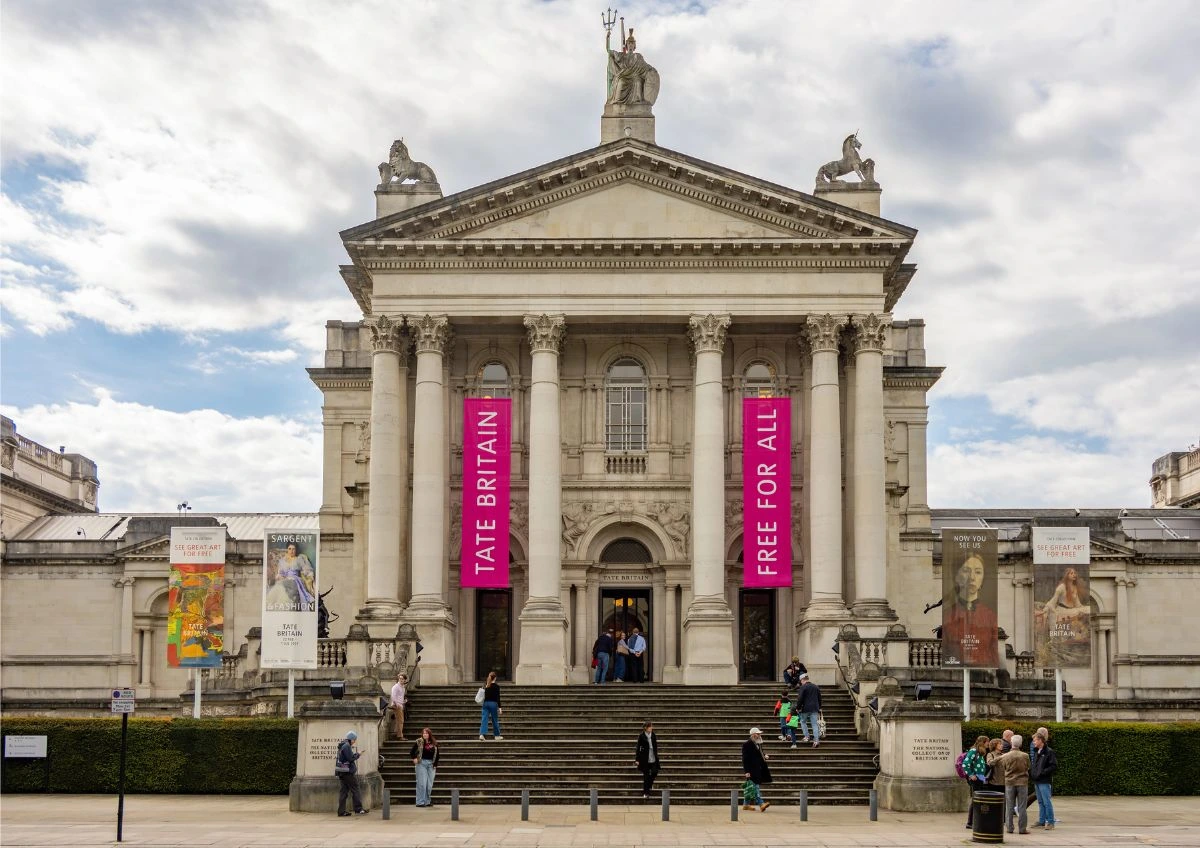
- Tate Gallery Group includes Tate Britain, Tate Modern, Tate Liverpool and Tate St Ives.
- The Victoria and Albert Museum includes the V&A in South Kensington and Young V&A, and recently opened V&A East and V&A East Storehouse, but not V&A Dundee, which operates separately.
❌ However, there are exceptions in this list to free admission. A small number of museums within these broader groups are self-financing, and so are not free: such as HMS Belfast, Churchill War Rooms, IWM Duxford, Royal Observatory and the Cutty Sark. Additionally, Tate St Ives is also not free because it stages temporary exhibitions only (rather than having a free main collection).
🗺️ Free admission to national museums in Scotland, Wales, and Northern Ireland is set by devolved governments, so they are not directly impacted by UK Government policy. However, all four UK nations introduced free admission together in 2001, and decisions made in one nation strongly influence choices across all four. The national museums and galleries in each nation are:
- Scotland: National Museum of Scotland & 3 National Galleries (Edinburgh)
- Northern Ireland: Ulster Museum (Belfast)
- Wales: All 7 Amgueddfa Cymru sites (including National Museum Cardiff, St Fagans, Big Pit, and the National Slate Museum)
Is free admission changing?
✈️ The government has indicated it will explore the possibility of charging international visitors at national museums and galleries in England, while retaining free access for UK residents. It argues that this could generate additional income for museums, helping to strengthen their long-term financial resilience and support wider access to arts and culture across the country. It has said it will work with the museum sector to explore how such a system could work, and will provide an update before the end of 2026.4
🎟️ However, charging tourists would impact everyone visiting the national museums and galleries. Rather than simply walking through the doors, visitors would need to demonstrate their eligibility for free admission – meaning ID checks. It could also encourage greater use of online ticketing and advance booking, particularly at the busiest museums where visitor numbers already create queues and capacity pressures.
❓ There is therefore a bigger question behind the debate than simply whether tourists should pay. For 25 years, free admission has meant that the collections held by Britain’s national museums can be accessed as part of everyday public life: by residents, school groups, families, tourists and anyone who happens to walk through the doors. The government now has to decide whether introducing a distinction between UK and overseas visitors is a worthwhile way of raising money, and if so, whether the financial benefits outweigh the practical and cultural consequences of changing a policy that has made free access a defining feature of Britain’s museums for a quarter of a century.
🗣️ At the Campaign for the Arts, we believe this debate needs to be informed by the people who visit these institutions, whose experience has been changed through free admission, and would be impacted if this was altered.
What happens next?
For now, national museums in England remain free to enter. The government is exploring the options, rather than having made a final decision. But the outcome of that process could determine what free access to the UK’s national collections looks like for the next 25 years.
This process is missing one important voice: yours. Please share what 25 years of free admission has meant to you.
❌ This survey closed on 5 October. Thank you to everyone who filled it in!
Completing the survey should take about 10 minutes. You can complete it anonymously, or leave your details to be informed about the results and outcomes. The survey closes on 5 October.
- Free access to DCMS-sponsored museums and galleries, Select Committee on Culture, Media and Sport Minutes of Evidence[↩]
- Public backs using tourist levy to keep national museums free for all, Art Fund[↩]
- Natural History Museum’s record breaking 7.1m visitors make it UK’s most popular visitor attraction, Natural History Museum[↩]
- Government response to the recommendations from the independent review of Arts Council England, Department for Culture, Media & Sport[↩]