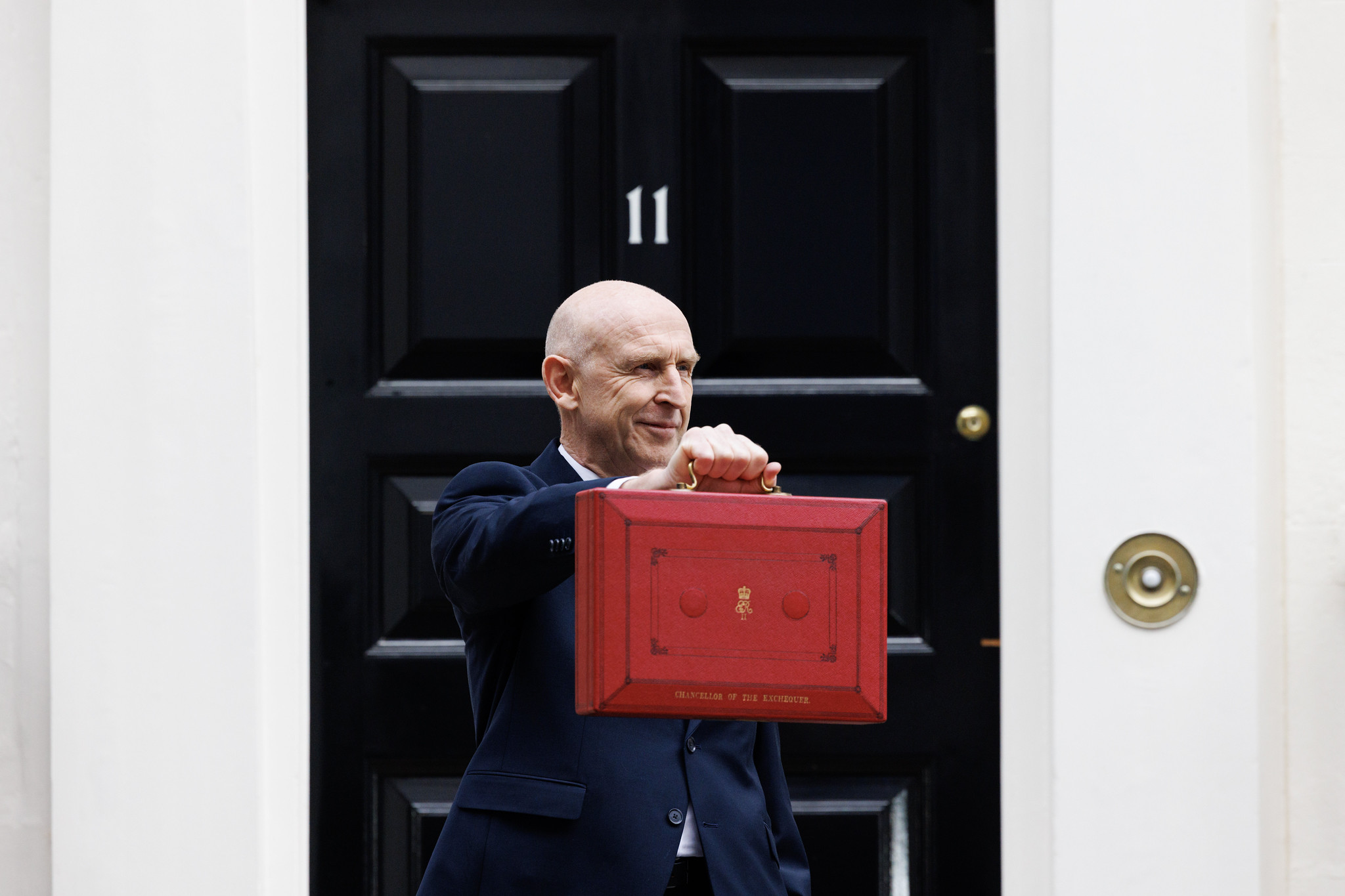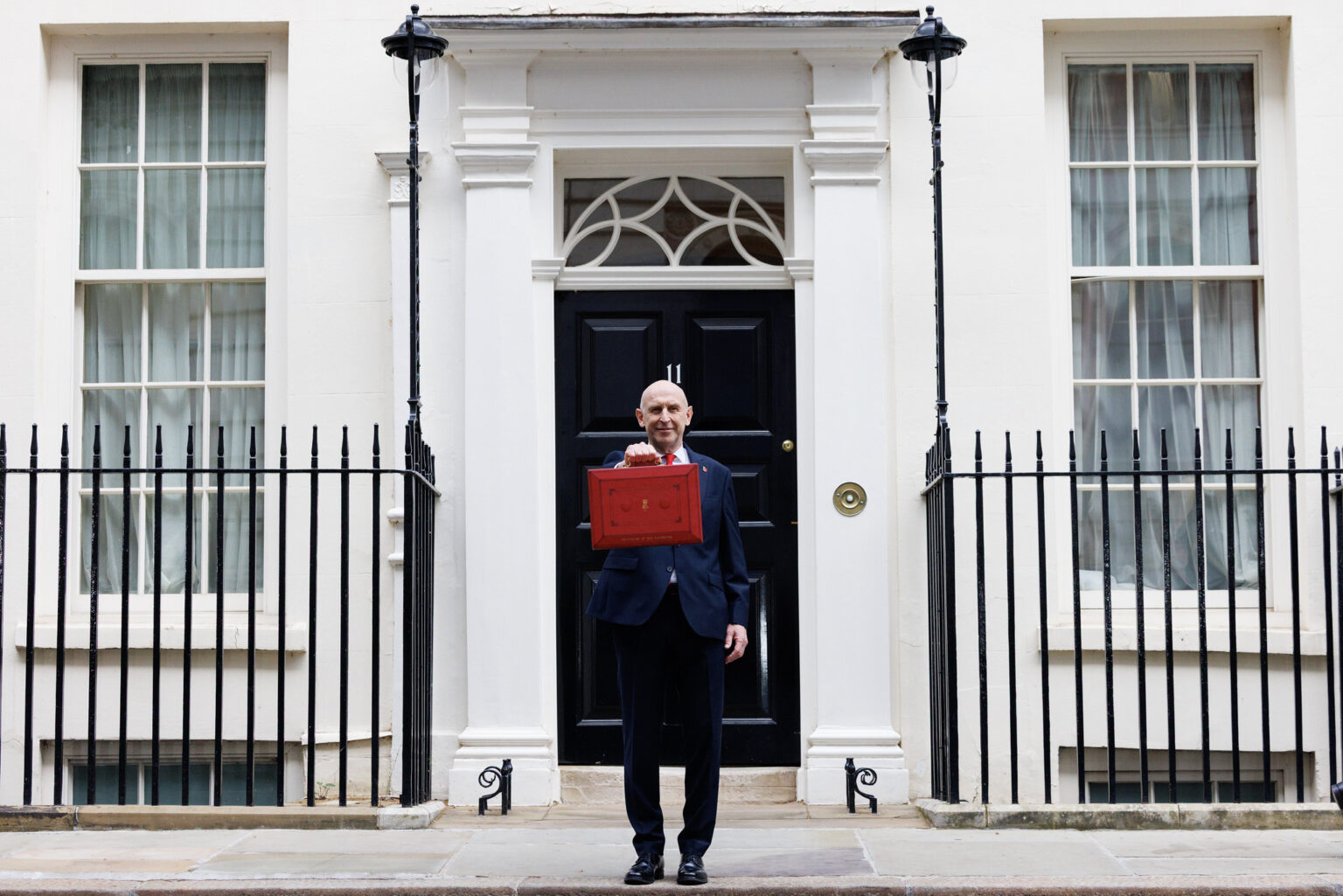
The Chancellor has unveiled the 2026 Autumn Budget, setting out the UK Government’s latest plans for tax and public spending.
Very few of the Budget’s measures were aimed squarely at culture, but many will affect artists and cultural organisations and, in turn, everybody’s access to the arts.
Public spending
Apart from defence (which got more money), government departments’ day-to-day budgets were left broadly unchanged in cash terms.1 Their capital budgets will be cut by a further 1% from 2027-28 to 2029-30 to help fund defence, and their administration budgets by 20% (up from 16%) by 2029-30.2
Because inflation has been higher than expected, departments’ cash budgets will be worth about 1% less in real terms than originally planned – a shortfall of around £7 billion a year across government.3
The Department for Digital, Culture, Media and Sport (DCMS) is the main public funder of the arts within the UK Government – directly funding 15 national museums and galleries, heritage and collection organisations Historic England and the British Library, and development agencies the British Film Institute and Arts Council England (which in turn administers core funds to nearly 1,000 cultural organisations).
Based on the decisions made at last year’s Spending Review, DCMS’s budget was already set to shrink in real terms up to 2028-29.
After 2028-29, total spending is set to grow only slowly, so commitments to protect certain budgets – including the larger defence budget – imply significant real-terms cuts to other ‘unprotected’ budgets, including DCMS’s.4
Whether these cuts actually come to pass will be a decision for next year’s highly consequential Spending Review.
DCMS’s budget looks larger in this Budget than in previous plans, but only because it recently took on the digital functions (and budgets) of the Department for Science, Innovation and Technology, which was broken up in July.5 There is no indication of any significant increase to planned culture spending specifically.
However, the Chancellor’s Budget did include some new money that could benefit culture:
- A £5 billion uplift to the financial capacity of the state-owned British Business Bank, which helps new and growing businesses to borrow money and raise investment. Part of it is expected to support defence-related businesses, but some of the rest could benefit commercial creative businesses.
- A new £80m ‘Local Renewal Fund’ to support local projects across the UK. These may involve work to “maintain heritage assets”.
- £20m to turn the former Littlewoods site in Liverpool into a creative campus for film, TV, gaming and immersive technology, and £6m for expansion of Glasgow’s Scottish Event Campus (both still subject to final approval).
Meanwhile, the Office for Budget Responsibility (OBR), the government’s independent forecaster, expects National Lottery grants – a major source of arts and heritage funding across the UK – to stay flat in cash terms to 2031-32.6 With inflation, that would mean a steady real-terms fall.
Scotland, Wales and Northern Ireland
Outside of England, most decisions on public spending for the arts and culture are taken by the devolved administrations. They receive block grants from the UK Government, based on the ‘Barnett formula’, as well as targeted funding.
As a result of decisions confirmed in this Budget, grants to the devolved governments will increase by a total of £1.3 billion between 2026-27 and 2029-30, on top of what they had already been allocated.7
🏴 The Scottish Government will receive an additional £600 million.
🏴 The Welsh Government will receive an additional £450 million.
🇬🇧 The Northern Ireland Executive will receive an additional £270 million.
Part of this is their share of funding for the new £100 Household Energy Payment in England, so that the devolved governments can offer similar support.8
How much reaches the arts and culture will be up to each devolved government. We will find out more as they set their 2027-28 budgets over the coming weeks.
Business rates in England
Business rates are charged on most non-domestic properties, normally based on an estimate of their annual rent (their ‘rateable value’). Our analysis found that the end of a temporary discount, combined with higher property valuations, left many arts and cultural organisations facing steep, sometimes existential, rises in their bills this year. The Budget offers some help with bills from April 2027, but does little about the valuations behind them.
Lower business rates bills
Following campaigning, the government gave pubs and live music venues a 15% discount earlier this year. In July the new Prime Minister, Andy Burnham, announced that this discount would rise to 35% from April 2027, and this Budget confirmed that move.9 Theatres, cinemas and nightclubs are not eligible for the relief, and the largest music venues (with a rateable value of £1 million or more) won’t get the full 35%.1011
But ‘retail, hospitality and leisure’ (RHL) properties – a category that has included theatres, cinemas, nightclubs and other kinds of cultural venues – will benefit from two broader measures:
- Rises capped at inflation. Potentially the biggest change for the arts: in 2027-28 and 2028-29, bill increases for qualifying RHL properties will be capped at inflation.12 One London theatre we analysed faced a 135% bill rise by 2028; after a 30% increase this year, further rises will now be limited to inflation. But it’s only a two-year reprieve, after which big increases could resume.
- More small venues paying nothing. From April 2027, Small Business Rates Relief will wipe out bills for qualifying RHL properties with a rateable value up to £18,000, and reduce them for those valued at up to £21,000.13 A grassroots music venue in York that we analysed will be spared a bill of over £1,000 – but few arts venues have rateable values this low.
This help is paid for partly by taxing high-stakes gambling machines more and cracking down on unpaid VAT from online sellers, while vape shops and adult gaming centres lose their RHL discounts. In principle, that is a positive shift towards taxing businesses with regard for their role in society, not just their size.14
The valuation problem
Discounts and caps can ease bills, but they don’t tackle the underlying problem: how cultural buildings are valued in the first place.
For free museums, at least, that problem is being addressed. The Natural History Museum’s landmark tribunal win in March set its rateable value at £1. Days before the Budget, the government confirmed that free-to-enter museums and galleries in England will be valued on what they actually earn, not ‘notional receipts’ (what they could earn by charging for entry), so many are likely to fall to £1. The Valuation Office is reviewing museum and gallery valuations – there are 1,165 such properties on the 2026 rating list – and will update them by the end of March 2027.15
There is no equivalent review for theatres, music venues and other cultural buildings. Yet the Budget promises extra help for “strategically important infrastructure”, such as airports, facing “exceptional increases in rateable values” once the current transitional relief package expires.16 We think arts and cultural venues, as vital social infrastructure, deserve the same.
Local powers and funding in England
Councils are major public funders of culture in England, but have more than halved their culture spending per person in real terms since 2010. The Local Government Association, which represents councils, welcomed extra money for rough sleeping and social housing in the Budget, but said that with “no overall funding increase for local government”, councils “will continue to struggle to meet demand and provide services”.17
The Budget did, however, take forward the government’s ‘Rewiring the State’ plans to shift power and money from Whitehall to mayors and councils.18 According to a new ‘Fiscal Devolution Roadmap’, mayors will get a 20% share of the business rates kept in their area from April 2027, and a share of income tax from 2028, with the amount to be set at next year’s Spending Review. By the end of the decade, local and regional government is set to keep all business rates income “in place of grants from central government”.19 Local leaders will also get £285 million next year to set up ‘Good Growth Funds’ to invest in regeneration and development.20
It will be up to each mayor and council to decide how much, if any, of this new local money to direct towards arts and cultural investment. Notably, the Chancellor said that, in his view, local leaders “shouldn’t have to come cap in hand to Whitehall to build a new tram or a new concert hall”.21
Culture and devolution
The new English Devolution and Community Empowerment Act makes culture one of the official responsibilities of ‘strategic authorities’ – regional or county-level bodies, many of them led by a mayor – for the first time.22 The government’s ‘Rewiring the State’ agenda also promises local people “greater control of how cultural and sporting investment is decided in their regions”. This “could include funding currently controlled by Arts Council England and Sport England”, while keeping individual funding decisions “outside of political interference”. More widely, the government will consider whether the responsibilities of arm’s length bodies – public bodies that work independently of ministers – should be transferred to local leaders or returned to government departments, unless ministers decide that keeping them independent is necessary.18 More detail is due by the end of the year.23 We have recently expressed concern about political interference in arts funding decisions, and have underlined our continued support for the ‘arm’s length principle’.
For its part, Arts Council England has welcomed closer partnership with mayors, and is giving local knowledge a bigger role in its next round of regular funding for cultural organisations (the National Portfolio), including through new Regional Boards.24
Overnight visitor levies
All strategic authorities (mayoral or not) will be able to charge a levy on overnight stays once new legislation is passed, with local leaders in England able to set out their plans for the money by March 2028. Last year the government suggested levies could fund “cultural and visitor attractions”25 but this will not be centrally mandated.26 We hope local leaders will take up that suggestion, and invest a share of any levy in the arts and heritage that bring so many visitors in the first place.
Books for pre-school children in England
The government will provide up to £15 million over three years (£5 million a year) to get more books into the hands of pre-school children, through organisations such as BookTrust and Dolly Parton’s Imagination Library. It is part of the government’s ambition for at least 75% of children to reach a ‘good level of development’ – a measure of how ready they are for school – by 2028.27
Only just over a third of 8 to 18-year-olds currently say that they enjoy reading in their free time. But sharing books from an early age can help to build a lifelong love of reading, so we warmly welcome this initiative in the 2026 National Year of Reading.28
Support for the self-employed
Around 45% of jobs in the cultural sector are self-employed – three times the share across the UK economy as a whole.29 That makes changes for the self-employed especially important for the arts.
Parental pay
From April 2029, eligible self-employed fathers, partners and adopters in Great Britain will be able to claim parental pay for the first time, as will those who miss out on statutory paternity or adoption pay because their work has been irregular or interrupted (a familiar pattern for many freelancers in the arts).30 The government says over 150,000 parents a year will get two weeks’ pay, currently worth up to £194 a week.31 It has been welcomed by organisations representing freelancers in the cultural sector, although the change is still two and a half years away.32
A bigger tax-free allowance
From April 2027, the Trading Allowance – the amount people can earn each year, before expenses, from self-employment or occasional work without paying tax – will triple, from £1,000 to £3,000.33 That could help people who earn a little from creative work alongside another job: an illustrator taking the odd commission, say, or a musician playing a few paid gigs.
More frequent tax payments
At the moment, many self-employed people pay their tax in two big instalments a year, based on the previous year’s bill (‘payments on account’). From April 2029, they will instead make smaller, more frequent payments, and pay more of their tax during the year in which they earn it. The government says this will help people budget, but the details are still to be worked out.34 Bectu, the creative industries trade union, warns that freelancers with irregular work and late-paying clients could end up paying tax before they have been paid, and wants safeguards such as being able to reduce or pause payments when work dries up.35
What was missing
Cultural tax reliefs
The reliefs for theatre, orchestras, and museum and gallery exhibitions stayed the same, despite some calls from the sector for them to be reformed or expanded – for example, to let the running costs of touring (such as transport and accommodation) count towards Theatre Tax Relief, and to make it easier for large-scale opera and ballet tours to qualify for the higher touring rate. The Society of London Theatre and UK Theatre has warned that theatre touring within the UK has fallen by 24% since 2019, and by 64% for plays and drama.36
Energy support for venues
Wholesale gas prices have nearly tripled since February37, but there was no targeted support announced for cultural venues’ energy bills at this Budget. They will benefit indirectly from the scrapping of a planned levy on gas bills and lower electricity costs from April 2028.38
Where it leaves us
There are parts of this Budget which will help the arts, and which we welcome, but ultimately it did nothing to reverse the long-term decline in public investment in culture, and the spending plans it leaves in place point to a further squeeze.
In his speech, the Chancellor said the government’s reforms will ‘reject crude cuts’ that ‘drive up costs elsewhere in the system’.21 That is the right principle more widely, and cuts to culture are a case in point: their costs are felt in people’s wellbeing, in the vibrancy of local communities and in our social fabric. We hope he will keep this in mind when setting plans for culture spending at next year’s Spending Review.
The government’s 10-year plan for the UK, which the Prime Minister has said will be published later this year, is a real opportunity to chart a new direction. Over 50,000 people have signed our petition asking for the arts to be part of it: available from childhood, accessible to all and thriving everywhere. By revitalising the arts, we can revitalise the nation.
- Economic and fiscal outlook – October 2026, Office for Budget Responsibility, paras 5.10 to 5.12[↩]
- Budget 2026, HM Treasury, paras 2.6 and 2.14[↩]
- Economic and fiscal outlook – October 2026, Office for Budget Responsibility, para 5.14[↩]
- Economic and fiscal outlook – October 2026, Office for Budget Responsibility, paras 5.16 to 5.18[↩]
- Machinery of Government Changes (HLWS298), written statement, UK Parliament[↩]
- Economic and fiscal outlook – October 2026, Office for Budget Responsibility, Table A.7[↩]
- Budget 2026, HM Treasury, paras 4.150 and 6.3[↩]
- Budget 2026, HM Treasury, para 3.5[↩]
- Burnham means business: PM slashes business rates bills for pubs, clubs and live music venues, Prime Minister’s Office and HM Treasury[↩]
- Budget 2026, HM Treasury, para 6.189[↩]
- Business rates: pubs and live music venues relief – local authority guidance, Ministry of Housing, Communities and Local Government, paras 11 and 15[↩]
- Budget 2026, HM Treasury, paras 6.189 and 6.191[↩]
- Budget 2026, HM Treasury, para 3.22[↩]
- Budget 2026, HM Treasury, paras 2.44 and 3.21 to 3.25[↩]
- Free-entry museums to benefit from new business rates policy after landmark tribunal ruling, Museums Association[↩]
- Budget 2026, HM Treasury, para 4.41[↩]
- LGA statement on Autumn Budget, Local Government Association[↩]
- Rewiring the State – Cabinet Statement, Cabinet Office[↩][↩]
- Fiscal Devolution Roadmap, HM Treasury[↩]
- Budget 2026, HM Treasury, para 4.64[↩]
- Budget 2026 speech, HM Treasury[↩][↩]
- English Devolution and Community Empowerment Act 2026, legislation.gov.uk, section 2[↩]
- Budget 2026, HM Treasury, para 4.58[↩]
- Arts Council England and Devolution, Building creative and cultural partnerships for a changing England, Arts Council England[↩]
- Visitor levy in England (consultation), Ministry of Housing, Communities and Local Government and HM Treasury[↩]
- Visitor levy in England: government response, Ministry of Housing, Communities and Local Government and HM Treasury[↩]
- Budget 2026, HM Treasury, paras 3.20 and 6.122[↩]
- Our latest research shows modest rise in children’s reading engagement, but levels remain low, National Literacy Trust[↩]
- Economic Estimates: Employment in DCMS sectors, April 2024 to March 2025, Department for Culture, Media and Sport[↩]
- Budget 2026, HM Treasury, paras 3.20 and 6.12[↩]
- Everyday fixes to make life easier for millions of Britons, HM Treasury[↩]
- Autumn Budget reaction: A ‘missed opportunity’ to boost the arts?, Arts Professional[↩]
- Budget 2026, HM Treasury, para 6.254[↩]
- Budget 2026, HM Treasury, paras 2.33 and 6.147[↩]
- Bectu rejects tax payment proposals that fail to reflect freelance realities, Timely Payments in income tax Self-Assessment: Bectu consultation response, Bectu[↩]
- SOLT & UK Theatre react to Autumn Budget 2026, SOLT[↩]
- Budget 2026, HM Treasury, para 1.12[↩]
- Budget 2026, HM Treasury, paras 4.22 and 4.25[↩]