🔒 This consultation closed at noon on 23 September 2026.
The outcome of the review will help decide where billions of pounds flow for a generation. Thank you for taking action for the arts.
The UK Government has launched a comprehensive review of National Lottery Good Cause funding – the money raised from lottery ticket sales that supports arts, sport, heritage and community projects in every part of the UK. It is the first major review of how the system works in almost a quarter of a century.1
Where does the money go now?
Around 23p of every £1 spent on National Lottery tickets goes to Good Causes, totalling £1.7 billion in the last year alone.
Since the Lottery’s creation in 1994, Lottery players have raised more than £53 billion for Good Causes, supporting more than 680,000 projects.
And the pot is expected to grow: the Lottery’s operator, Allwyn, aims to double weekly returns for Good Causes from £30 million to £60 million by 2034.1
By law, every £1 of Good Cause funding is currently divided into four pots:
The money in each pot is then awarded by 12 distributing bodies:
As well as the direct Arts & culture share allocated via Arts Councils and the BFI, arts and cultural projects also draw on other pots, including Heritage Fund support for museums and community arts backed by the Community Fund.
The Government is asking whether those shares should change, and nothing is guaranteed. It has happened before: when new causes were added in 1998, every existing share – arts, sport, heritage and charities – was cut to 16.7%2, and the 20% shares were only restored in 2012.3
Today’s arts share – worth in the region of £340 million in the last year alone4 – is not automatically protected. It is up to all of us to make the case for it.
What has Lottery funding done for the arts?
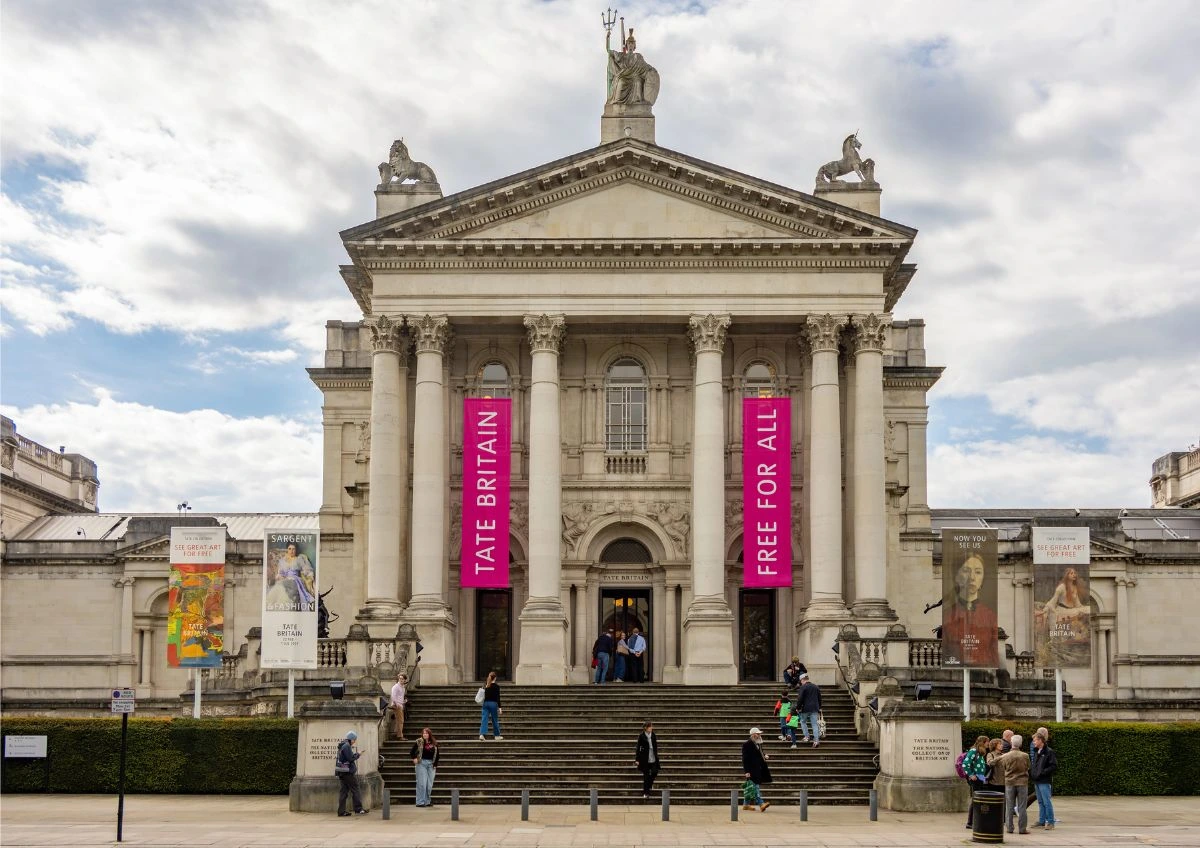
Lottery funding has built much of the cultural landscape we enjoy today. It helped create Tate Modern and the Wales Millennium Centre, The Glasshouse in Gateshead and V&A Dundee. It helped rebuild Liverpool’s Stirling Prize-winning Everyman and Belfast’s Lyric Theatre.5 £584,000 of Lottery money gave the North East the Angel of the North.6 In Northern Ireland, Lottery funding has helped put a dedicated arts facility within 20 miles of every person.7
And beyond the landmarks, Good Causes funding supports films, festivals, theatres, galleries, museums, orchestras, choirs and carnivals in every nation and region.
Just as importantly, it backs people as well as buildings. In every UK nation, the open grants that an individual artist or a small company can apply for are funded by the Lottery8 – very often their main route into public funding. A single grant typically creates paid work for many arts workers – so this really matters for freelancers, and for the wider public who benefit from what they create.
Since the advent of the Lottery, the Government has mandated that Good Cause funding should only be spent on projects and activities which do not typically receive core government funding. This is known as the additionality principle. But as core public funding for culture has fallen sharply in real terms (see our report with the University of Warwick, The State of the Arts), Lottery money has become even more vital, taking more and more of the strain for activity that might previously have been supported by core funding. Securing and strengthening Good Cause funding for the arts has never been more important.
What is the consultation asking?
The consultation first asks about your own awareness of the impact of Lottery funding. You can use the tool linked above for inspiration, as well as drawing from your own experiences.
The rest of the consultation is built around three key questions:
What should Good Cause funding support?
The consultation asks several questions that will determine how much funding each Good Cause receives in the future. The Campaign for the Arts’ organisational response will urge the Government to:
Protect the arts’ share. Arguing explicitly for retaining at least the 20% statutory allocation for the arts.
The review will also consider what kinds of activity benefit from Good Cause funding. The Culture Secretary has signalled an intention to shift funding towards local groups responding to place-based needs, saying:
“The majority of funding is spent on large grants to the detriment of smaller, community-led organisations … The system favours those who have the ability to write grants that meet the needs of the system, rather than the system bending to the needs of communities.”9
CFTA believes that Lottery funding should:
Fund the arts at every scale. We want to see landmark buildings and major film projects as well as a first grant for a freelance artist. There’s a risk that the consultation frames large and small projects as competing with one another, when in reality a thriving arts ecosystem needs both.
Who should decide where it goes?
The Government is keen to involve communities more in decisions about how funding is allocated. The Culture Secretary has expressed her concern that:
“Too often decisions are top-down, remote and made in distant rooms hundreds of miles away from the communities who know their needs and ambitions best.”9
There is no suggestion that the existing system of 12 national distributing bodies will change, but the consultation invites ideas for how your community could be more involved in making decisions within that system. CFTA will argue to:
Count every kind of community. Reminding decision-makers that cultural communities exist beyond geographical postcodes and include discipline-specific and identity-led networks. A good funding system should recognise them all.
The Culture Secretary is also concerned about geographical inequity, saying:
“Funding is concentrated in London and the South East and is weighted to reflect populations, rendering too many towns and villages invisible to decision makers.”9
CFTA will support attempts to make every place more visible to decision makers. We will also support the continuation of Lottery funding to national-level organisations and projects. Several of these are currently headquartered in London and the South East but benefit communities across the UK.
Fund the arts nationally and locally. A national touring theatre company provides local access, and a digital arts project can bridge the local and the national. There’s a risk that the consultation frames local and national projects as competing with one another, when in reality a thriving arts ecosystem needs both.
How can it be made simpler to access?
The Culture Secretary has said:
“We are determined to strip away the bureaucracy that acts as a barrier to community investment, making it easier for grassroots groups to access the funding they need.”9
The consultation includes questions which specifically address the ease and equity of application processes, presenting an opportunity for meaningful simplification that would be welcomed by many arts organisations and artists. In our response, CFTA will:
Support the simplification of application and reporting processes, acknowledging that a bid-writing or evaluation skillset is not necessarily the same as an artistic one.
How to make your response to the consultation
🔒 This consultation closed at noon on 23 September 2026.
The outcome of the review will help decide where billions of pounds flow for a generation. Thank you for taking action for the arts.
You’re welcome to draw on our arguments – but the most powerful response is your own. The consultation asks about your experiences and your community. Say what the arts make possible where you live, and what more they could do for you.
1. Submit your response
The consultation is open to everyone aged 16 or over, in every part of the UK, whether or not you play the Lottery. The online survey takes about 15–20 minutes, and you can save your progress and return within a week. The deadline was midday on Wednesday 23 September 2026.
Responses could also be sent by email or by post to DCMS.
2. Share this page
Use the links at the bottom of the page to share with friends, family and colleagues who care about the arts. The more of us who respond, the better our chance of protecting this crucial funding.
3. Tell us your story
If Lottery funding has made a difference to you – a project you loved, a grant that changed your practice, a place that matters to your community – we’d love to hear about it. You can leave a comment below, or email us.
Other responses
- Public to have their say on National Lottery Good Causes, Gov.uk[↩][↩]
- The National Lottery – the first 15 years (2009), House of Commons Library[↩]
- National Lottery Good Causes: Fund what matters to you: Call for evidence (2026), DCMS[↩]
- 20% of the £1.7 billion raised for good causes in the last financial year (DCMS call for evidence, 2026)[↩]
- Lottery contributions include £56m for Tate Modern (The Art Newspaper), £31.7m for the Wales Millennium Centre, £13.9m for V&A Dundee (The National Lottery Heritage Fund), £17m of the £27m rebuild of the Everyman (BBC News) and £2.075m towards the rebuilt Lyric Theatre (Arts Council of Northern Ireland)[↩]
- The Angel of the North is 20 today, Arts Council England[↩]
- National Lottery windfall has transformed cultural landscape, Arts Council of Northern Ireland[↩]
- Arts Council England’s National Lottery Project Grants and Developing Your Creative Practice; Creative Scotland’s Open Fund for Individuals; the Arts Council of Wales’s Create and Engage programme; the Arts Council of Northern Ireland’s Support for Individual Artists Programme[↩]
- Written statement by Lisa Nandy MP, 1 July 2026, Parliament.uk[↩][↩][↩][↩]
2 responses to “Have your say on the future of Lottery funding for the arts”
Please ensure that the current distribution remains – it seems a fair and sensible mix.
But I’d be interested to know if more than 23p on every pound could be spent on these good causes. It does seem quite low.
The Arts are so important – a way to recognise our culture, to give children & young adults a chance to experience their own creativity & make a huge financial contribution to the UK.