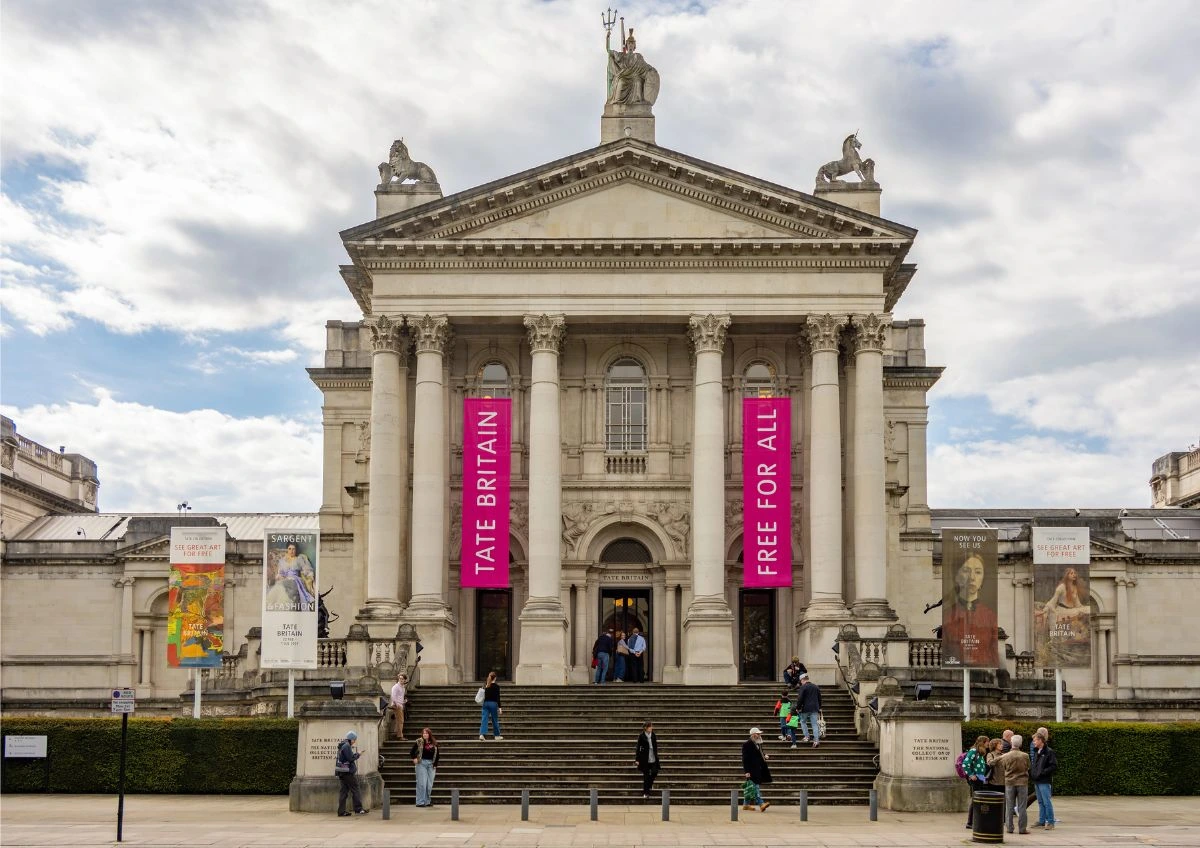
Marking the 25th anniversary of universal free admission to national museums and galleries on 1 December, a major new report published today by the Campaign for the Arts examines the value of the policy to people and the difference it has made in their lives over the past quarter-century. The report, which follows Culture Secretary Lisa Nandy’s decision in September to rule out introducing new charges for international tourists,1 draws on in-person interviews and an online survey of nearly 1,500 people across all four UK nations.
Asked to finish the sentence “Today, anyone can walk through the doors of any UK national museum or gallery and experience their permanent collection for free. That makes me feel…”, respondents used the word “proud” 441 times, more than twice as often as the next most common answer, “happy” (202). This is despite a stark wider trend: Demos found that pride in being a British citizen has fallen from 74% in 2011 to 47% in 2026.2
Caroline from Manchester described free entry as “a real star in the UK’s crown. It signals that culture belongs to everyone”. One visitor at the V&A said: “I’m so proud, in some sense – and I’m not proud to be English in many ways – but that all museums are free”. AG in London described themselves as “proud to be British in a country that welcomes everyone to enjoy our cultural heritage together”.
Beyond boosting visitor numbers, which according to Art Fund and ALVA research have almost doubled at England’s national museums since free admission was introduced,3 the report identifies a distinctive quality to universal free admission that it terms “freeness”. This quality makes national museums and galleries:
Part of everyday life, not a tourist checklist
Visitors contrasted UK museums with paid-for institutions abroad. A group at the National Gallery said they went to the Louvre, “took a picture, and went away. Because it’s like 30 euros”. In the UK, free entry takes the pressure off: “you don’t feel trapped and needing to ‘make the most’ of what you paid”, said LH from London.Vital third spaces and refuges for mental health
With more than one in five adults now having a diagnosed mental health condition,4 respondents described visiting museums and galleries to calm down before a job interview, escape a difficult home, or cope with grief, loneliness and anxiety. And for Mela from Manchester: “It’s as important as healthcare, indeed it IS a form of healthcare”.
For people on low incomes, they are essential civic spaces: Sally from Liverpool meets her best friend, who is on Universal Credit, at the National Railway Museum in York because “there’s nowhere else we could meet that’s free, child-friendly, warm and dry”.
Places that break down class barriers, inspire children and launch careers
Against a backdrop of arts subjects at their lowest share on record in schools,5 and fewer than one in ten arts workers coming from working-class backgrounds,6 respondents described free museums as places where children’s curiosity takes root and where a creative career first seems possible.
Helen, a working-class arts worker from Sheffield, said: “I would not have the career or interests I have now if I had not had access to these spaces, and I would not have visited had my family had to pay for them”. For Roxana in Doncaster, “If I had to pay to go, I probably wouldn’t have visited as ‘it’s not for me’”.
Other findings from the online survey (1,482 respondents):
- 89% say that free entry encourages people to visit other institutions, or to return sooner
- 76% say that even a small entry charge would be a meaningful barrier
- 66% say compulsory pre-booking would affect their visit, 43% significantly so
- 61% of online respondents opposed charging international visitors for entry
Chris Smith (Lord Smith of Finsbury), Culture Secretary when universal free admission was introduced, said:
“Making our national museums and galleries free for everyone has transformed hundreds of thousands of people’s lives. It brings cultural and historical experience closer to everyone. It means we all regard these treasure-houses of our nation’s story and identity as ours.
“On the day they went free, the Science Museum invited me to come and cut a ribbon and throw open the doors. We had a lovely ceremony. And I remember vividly, half an hour later, I was wandering around in the foyer of the museum, and a young man carrying his little daughter on his shoulders was making a bee-line towards me. As he came up to me, he turned his face to his daughter and he said ‘I want you to say thank you to this man; it’s because of him we’re able to be here today’. That was the moment when I knew we’d done the right thing.”
Jack Gamble, Director of the Campaign for the Arts, said:
“Universal free admission was a bold decision. It took real political will, right down to changing VAT rules so museums could afford it, and 25 years on, it’s hard to imagine the UK without it. Our latest research shows why: it has made national museums and galleries a valued part of many people’s everyday lives and a source of national pride.
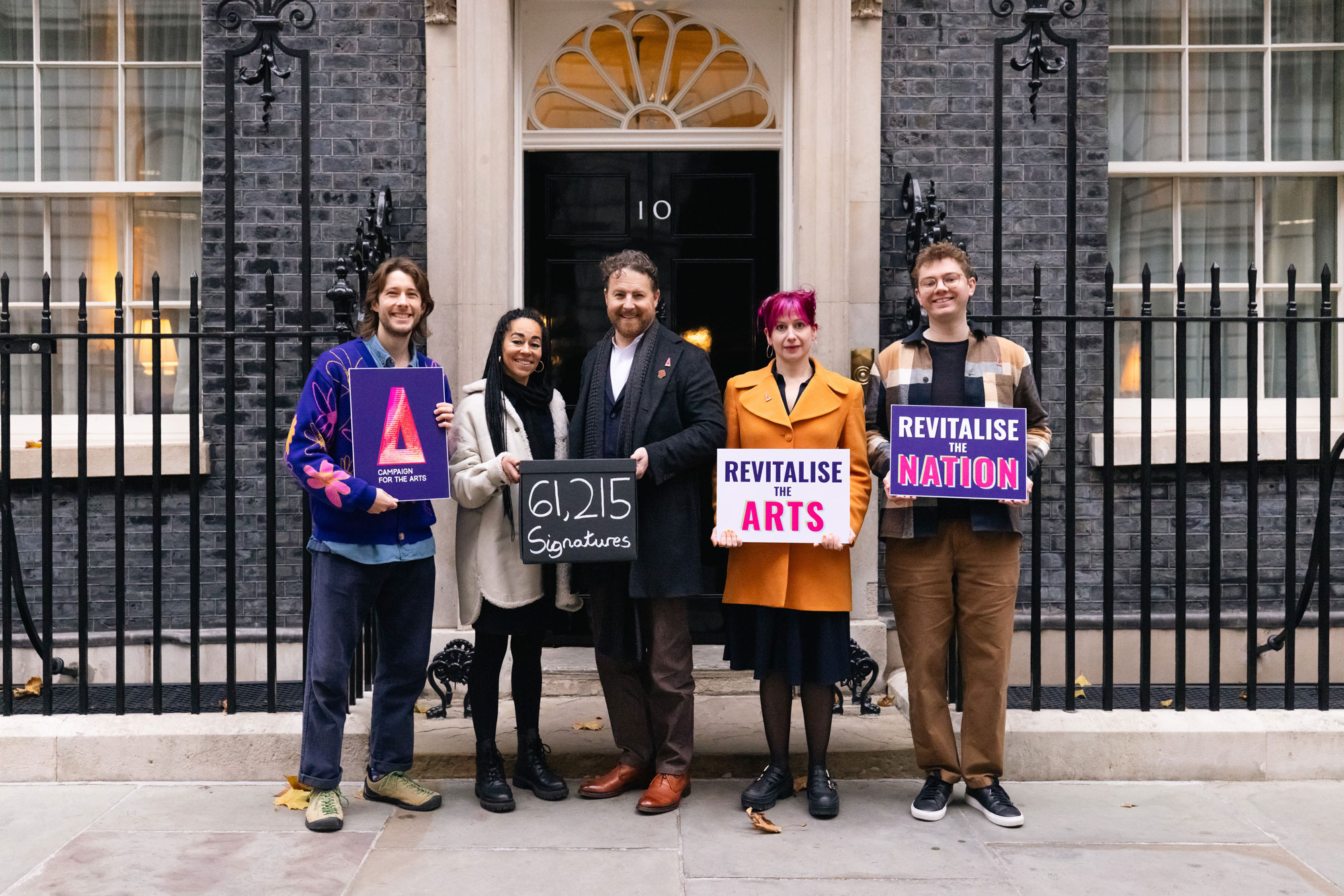
“Free admission is a reminder of the lasting difference that bold cultural policy can make, and the government should be just as ambitious now. More than 60,000 people have asked the Prime Minister to put the arts in his 10-year plan. This is a golden opportunity for Andy Burnham to make decisions the country will still feel proud of in 25 years’ time.”
Dr Helena Hollis, Research & Analysis Lead of the Campaign for the Arts and co-author of the report, said:
“We know free admission has helped visitor numbers to skyrocket over the last 25 years, but we wanted to understand what it has actually felt like to the people walking through the doors. Analysing the experiences of just over 1,500 people across the UK, we realised the data was all pointing towards something bigger than the sum of its parts, something we’re calling ‘freeness’.
“Free admission is just the policy; freeness is what it produces. It turns national museums and galleries from places we visit into places we belong, changing how we feel about them, how we use them, and what going to them is actually like.”
Alison Cole, Director of The Cultural Policy Unit and part of the original 1997-2001 campaign, said:
“I was delighted to play a part in the VAT solution that made universal free admission possible back in 2001, and I am thrilled that this policy has stood the test of time and is so greatly valued.
“Free admission to our national museums and galleries has become a cornerstone of our cultural freedoms and privileges. It also embodies our nation’s cultural ethos at its very best: generous and inclusive, and founded on the belief that the joys of learning, discovery, and creativity should be accessible to everyone.”
- National museums to remain free for everyone. 29 September 2026. gov.uk[↩]
- A Place for Pride 2026: The collapse of pride in Britain – where to find it and how to rebuild it. 16 Aug 2026. demos.co.uk[↩]
- Why Art Fund has been working to keep national museums free – for everyone. 29 September 2026. artfund.org[↩]
- The Foundation Reports: The state of mental health inequality in the UK. June 2026. mentalhealth.org.uk[↩]
- Arts’ share shrinks again at A-level, stagnates at GCSE. 20 August 2026. campaignforthearts.org[↩]
- Arts, Culture and Heritage: Audiences and Workforce. 15 May 2024. pec.ac.uk[↩]